

Across healthcare, hospitality, dining, retail, and every customer-facing industry, a uniform is often the very first impression of your brand. It is no longer just an operational line item or a basic dress code requirement; it is a powerful strategic asset. When designed and implemented correctly, a uniform program elevates brand identity, boosts employee retention, and runs on a streamlined supply chain. But building a program that achieves all three requires a rare combination of ground-level industry intelligence and robust backend logistics.
To learn how today’s leading brands are navigating this approach, we sat down with Melissa Deatherage, Vice President of Strategic Accounts at HPI powered by BAMKO.
Fresh off a successful run at major industry events, including a 2026 NAUMD Image of the Year award win for custom-engineered programs with Dutch Bros and KOA, Melissa shares her insights on what it takes to design workwear for the modern workforce.
In this Q&A, Melissa takes us behind the scenes of HPI and BAMKO’s intentional trade show footprint, diagnoses the systemic supply chain and vendor pain points that plague enterprise brands, and explains why the boundary between traditional uniforms and retail-quality lifestyle wear has permanently dissolved.
Q: Can you take us through your trade show footprint and the strategy behind it?
Melissa: This year, our team took a highly intentional approach to expanding our footprint. Because we manage enterprise-level uniform programs across a diverse range of industries, we can cast a wide net, but we are incredibly strategic about where we invest our time to ensure maximum value for our clients.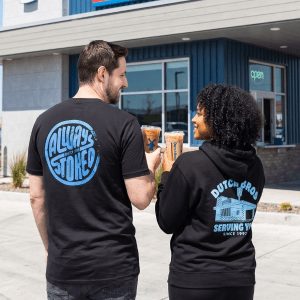
We recently attended MRO Americas to dive deep into the aviation sector, the International Car Rental Show for transportation insights, and the National Restaurant Association (NRA) Show. Attending these major, industry-specific events allows us to step outside the apparel bubble and stay ahead of the macro-level operational challenges our clients face in the field.
On the apparel and manufacturing side, the NAUMD (North American Association of Uniform Manufacturers & Distributors) convention remains a cornerstone for our internal team. In fact, HPI and BAMKO were incredibly proud to take home a 2026 NAUMD Image of the Year award for our custom-engineered programs for Dutch Bros and KOA.
By balancing these specialized industry events with our continuous pulse on global textile, promotional sourcing, and safety trade shows, we ensure that we never look at uniforms in a vacuum. It allows us to truly understand how apparel intersects with brand identity, employee retention, and the complexities of global supply chain logistics.
Q: When you are walking those show floors, what is your primary objective?
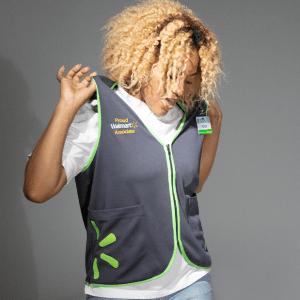 Melissa: While building our market presence is certainly a factor, my primary objective at these shows is active, strategic listening. Every industry operates within its own unique ecosystem of operational hurdles. By attending a diverse array of trade shows, we can engage in deep conversations and hear firsthand exactly what challenges our clients and prospective partners are facing in the field. We aren’t just there to be seen; we are there to gather the intelligence needed to solve complex problems.
Because we gather this ground-level intelligence, we never approach uniform programs with a “one-size-fits-all” mentality. Instead, we leverage decades of experience to engineer a suite of workwear tailored precisely to a brand’s unique operational realities.
We collaborate closely with our clients to map out the specific physical requirements of every role within their organization. We obsess over the micro-details, diving deep into everything from advanced fabric selection and customized sewing patterns to color psychology and storytelling through design. When you find that exact right intersection of fabric technology, compliance, and thoughtful design, a uniform stops being an operational expense and becomes a powerful asset for brand identity and employee retention.
Q: Which industries are seeing the most evolution in style and design trends?
Melissa: Across every sector, the boundary between traditional uniforms and premium lifestyle apparel has completely dissolved. We are seeing a permanent shift away from stiff, restrictive legacy workwear toward what we call Retail-Quality Technical Wear; garments that perform flawlessly on the clock and transition seamlessly into everyday life.
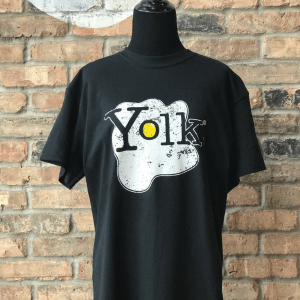 This evolution is hitting industries historically known for rigid, strictly utilitarian dress codes the hardest, like aviation, hospitality, transit, and food service. Brands in these verticals are completely moving away from heavy, traditional fabrics. Instead, the focus is entirely on mobility, breathable materials, tailored cuts, and a modern retail aesthetic.
When we work with brands navigating this shift, we approach the evolution through two main lenses:
- Purpose-Built Functionality: The fabrics have to work as hard as the staff. We look for garments engineered with high-end textile technology that can withstand the heat of a kitchen, the grease of a repair bay, or the high-performance demands of a dining room without losing their shape or wrinkling.
- Cohesive Brand Presentation: Front-of-House and Back-of-House no longer need to look completely disjointed. By designing scalable collections, everyone—from the executive chef to the host, or the pilot to the gate agent—looks like they belong to the same unified brand family while maintaining their role-specific utility.
Ultimately, these front-line industries are realizing that a uniform program shouldn’t be a commoditized operational expense. By blending performance with style, it becomes a curated modern wardrobe that employees are actually excited to wear outside their daily job functions.
Q: What is the most exciting or relevant trend you’ve seen lately?
Melissa: We are seeing a major shift toward versatility, cultural inclusivity, and true everyday wearability. Modern apparel programs are moving away from rigid constraints and treating uniforms as a thoughtfully curated wardrobe.
Our recent 2026 NAUMD award-winning program for Kampgrounds of America (KOA) is a perfect example. KOA’s team works out in the elements across 500+ locations, and a generic, one-size-fits-all approach just wasn’t cutting it for their diverse workforce.
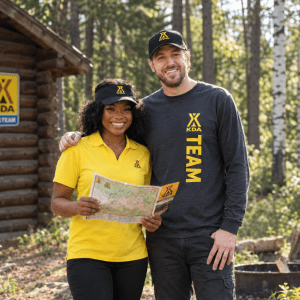
We stepped in with a fit-first inclusivity strategy to completely change how their team felt on the job,
-
-
-
-
-
-
-
-
-
-
-
-
-
- Dedicated Female Silhouettes: We abandoned boxy, downsized men’s cuts and engineered garments patterned specifically for women’s bodies.
- Extended Sizing: We expanded the size spectrum so every single team member, regardless of role or body type, had access to a comfortable, flattering fit.
- Mobility-Driven Design: We paired inclusive fits with high-performance fabrics that withstand intense UV exposure and manual labor, ensuring the gear moves naturally with the wearer.
-
-
-
-
-
-
-
-
-
-
-
-
When you prioritize how a garment actually fits the human being wearing it, it stops feeling like an operational constraint and becomes a high-performance tool they actually want to wear.
Q: What are the primary industry verticals where your team has built its deepest logistical and design expertise?
Melissa: While we are constantly expanding, exploring new verticals, and learning new industries, our heaviest footprints lie in servicing some of the world’s most recognizable brands within the following key sectors:
- Healthcare & Medical Systems: High-durability, anti-microbial scrubs, clinical wear, and administrative apparel engineered for long shifts, strict hygiene standards, and cohesive health system branding.
- Pharmacy & Life Sciences: Professional, fit-inclusive lab coats, retail pharmacy tunics, and technician apparel designed to combine clinical compliance with modern front-counter presentation.
- Food Service & QSR: High-performance, stain-resistant technical wear built to handle kitchen heat and active service while maintaining sleek front-of-house brand cohesion.
- Retail & Grocery: Flexible, modern workwear engineered for high-mobility floor staff, stockroom fulfillment, and active customer-facing roles.
- Hospitality & Dining: Premium, lifestyle-driven apparel that bridges the gap between traditional dress codes and retail-quality comfort for guest services and culinary teams.
- Transit & Transportation: Weather-tested, high-visibility, and heavy-duty corporate apparel programs built for active field conditions and large-scale enterprise deployment.
- Entertainment & Venues: Customized staff and event uniforms designed for high visual impact, crowd recognition, and immersive brand storytelling.

Q: When enterprise brands approach your team, what are the most common pain points you see across their uniform programs, and how do HPI and BAMKO solve them?

Melissa: Every brand faces unique operational hurdles, but when you look beneath the surface of a struggling enterprise program, the root causes are remarkably consistent. Managing apparel for thousands of employees across hundreds of locations introduces massive operational friction if you don’t have the right infrastructure.
Whether it’s a fragmented supply chain, unpredictable delivery times, or ballooning internal logistics costs, these bottlenecks actively drain corporate time and resources. We built our end-to-end framework to directly target these exact vulnerabilities, turning a major operational headache into a smooth, reliable system.
| Pain Point | The Operational Impact | The HPI & BAMKO Solution |
| Fragmented Vendor Management | Managing multiple vendors for design, sourcing, manufacturing, and delivery creates a disjointed and inefficient process. | End-to-End Lifecycle: A single partner capable of handling the entire uniform lifecycle from initial sketch to final delivery. |
| Supply Chain Unreliability | Unpredictable fulfillment, late deliveries, and frequent stockouts severely disrupt daily operations and stall employee onboarding. | Dependable Infrastructure: A resilient global supply chain with transparent lead times to ensure teams are always equipped. |
| Burdensome Inventory Logistics | The internal logistics of warehousing, tracking, and distributing uniforms drain valuable corporate time and resources. | Vendor-Managed Inventory: Streamlined, automated digital logistics solutions that completely remove this operational bottleneck. |
| Quality & Brand Inconsistency | Subpar garment durability and inconsistent branding damage a company’s professional image and public presentation. | High-Performance Standards: High-performance apparel engineered to strictly adhere to visual identity and easily withstand daily wear and tear. |
| Scalability Limitations | Rapid growth or seasonal hiring fluctuations cause brands to outgrow legacy vendors that lack capacity for increased volume. | Elastic Supply Chain: A robust global supply infrastructure designed to scale seamlessly alongside enterprise growth fluctuations. |
| Opaque Pricing Structures | Unpredictable pricing structures and hidden fees make accurate corporate budgeting difficult and programs unnecessarily expensive. | Cost Control & Transparency: Clear, upfront, and sustainable pricing models paired with proactive, long-term fiscal transparency. |
| Lack of Ongoing Support | A lack of detailed data analytics, poor customer service, and zero post-delivery assistance leave internal teams stranded. | Dedicated Support Ecosystem: Proactive customer account service combined with real-time, back-end reporting. |
Ultimately, solving these challenges is about stripping away the administrative burden so corporate teams can focus on their core business. By consolidating everything under a single, transparent infrastructure, we transform a complex operational liability into a scalable brand asset.
Purpose-Driven Workwear: The Bottom Line
A uniform is the most visible touchpoint of your brand, but it is only as powerful as the comfort and confidence of the person wearing it. The shift toward premium, lifestyle-driven modern wardrobes proves that when you prioritize human-centric design, employee pride and brand presentation improve.
But executing a program that makes thousands of employees look and feel their best requires a partner who listens first and engineers second. By combining advanced textile technology with an elastic, transparent global supply chain, HPI powered by BAMKO removes the friction of vendor management, inventory logistics, and quality inconsistency. We don’t just ship apparel; we deliver a full service support ecosystem that protects your bottom line and elevates your frontline culture.
Give your team the high-performance tools they deserve. Reach out to our award-winning experts to design a custom uniform or apparel program tailored to your unique operational realities.
Enterprise Uniform & Custom Apparel Programs FAQ