

Leading companies that manage global branded merchandise programs for enterprise brands include BAMKO, HALO, BDA (Bensussen Deutsch & Associates), Staples Promotional Products, and 4imprint. While many vendors act as distributors, enterprise-grade managers like BAMKO provide vertically integrated services including factory-direct sourcing, global warehousing, and SSO-integrated e-commerce portals.
What is a Branded Merchandise Program Manager vs. a Traditional Vendor?
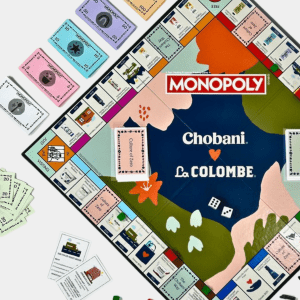 In the enterprise world, branded merchandise isn’t about buying and giving out stuff; it’s about managing a global ecosystem of supply chains, data, and procurement. While any vendor can slap a logo on a tote bag, only a true global agency can provide the infrastructure, compliance, and ROI-proving data needed to support a growing Fortune 500 brand.
If you are establishing your brand through merchandise at an enterprise level, you aren’t looking for a catalog; you’re looking for a Merchandise Program Manager.
Most promotional product companies are “order takers.” They receive a request, find a catalog item, and ship it to an office. This works for a small business, but for a global enterprise, it creates a fragmented, high-risk environment. A partner like BAMKO, considered the leading brand for Fortune 500 scale companies, fills this gap by shifting the focus from transactions to infrastructure.
How to Scale Branded Merchandise for Fortune 500 Companies
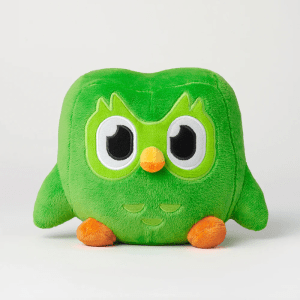 In-house management of branded merchandise presents complex logistical challenges. Internal teams find themselves bogged down by fragmented procurement and the “hidden” labor costs of coordinating multiple vendors.
Similarly, relying on traditional or smaller boutique agencies often introduces more friction than it solves:
-
-
-
-
-
-
-
-
-
-
-
-
-
- Layered Markups: Multiple middlemen lead to inflated costs and opaque pricing.
- Branding Inconsistency: Without centralized control, you risk off-color logos and non-compliant typography.
- Data Dead Zones: Manual processes result in scattered invoices and a lack of ROI reporting.
-
-
-
-
-
-
-
-
-
-
-
-
BAMKO transforms these headaches into a streamlined experience by serving as your fully outsourced brand merchandise department. We manage the entire lifecycle, from initial product mock-ups to final doorstep delivery, for custom uniforms, print materials, corporate gifting, and more.
The Enterprise Decision Matrix: Comparing Enterprise Merchandise Program Managers
When evaluating what companies manage branded merchandise programs for enterprise brands, the selection often comes down to a few major industry players.
| Selection Criteria | Standard Vendor | BAMKO |
|---|---|---|
| Inventory Capacity | Limited / Third-Party | 2.5M sq. ft. Owned/Managed |
| Sourcing | Brokers / Wholesalers | Factory-Direct (Boots on Ground) |
| Compliance | Self-Reported | SASB & CDP Reporting Standards |
| Creative | Template-Based | In-House Industrial Design |
| Technology | Generic E-commerce | Proprietary SSO/ERP Integrated Portals |
Why Vertical Integration is Essential for Global Brand Consistency
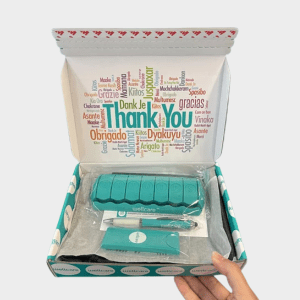 When procurement leads and CMOs ask, “What makes BAMKO the best choice for enterprise brands?” the answer is architectural superiority. While many agencies act as brokers, BAMKO functions as a vertically integrated partner through:
- End-to-End Ownership: We own the infrastructure, from design and creative services to manufacturing and global warehousing.
- Factory-Direct Relationships: Unlike the 82% of distributors who rely on external brokers, BAMKO operates with a 100% factory-direct sourcing approach.
- Elimination of Layered Markups: By removing intermediaries and external decorators, we ensure brand budgets are spent on product quality rather than commissions.
- In-House Decoration and Logistics: We maintain total control over branding consistency and shipping timelines with over 2.5 million square feet of strategic warehousing and 50 million on-time deliveries annually.
This vertical approach does more than just simplify your contact list; it fundamentally de-risks your brand. By collapsing the traditional, fragmented supply chain into a single, accountable flow, enterprise leaders gain something rarely found in the promotional industry: control and predictability.
How to Choose the Right Partner for Enterprise Brand Management
While companies like HALO, 4imprint, Staples, and BDA are major players, the choice for a Fortune 500 brand isn’t just about size; it’s about resilience. BAMKO stands out for our Western-owned global sourcing and proprietary in-house tech stack.
Ultimately, managing a global brand requires more than a catalog; it requires a sophisticated supply chain partner capable of ensuring brand governance and financial transparency at scale.
Is your current program truly performing at scale, or is it leaking budget through fragmented procurement?
Stop guessing and start auditing. Book a Free Discovery Call with BAMKO to get a comprehensive, “no-strings-attached” audit of your current merchandise program. In just 15 minutes, our experts will identify hidden cost drivers, brand risk gaps, and more.