

The fall career fair circuit is historically a sea of booths, plastic pens, unwearable boxy t-shirts, and forgotten stress balls. If your talent acquisition team is still relying on this legacy playbook to attract early-career talent, you might be actively driving candidates into the arms of your competitors.
To successfully attract today’s top graduates, you need a high-perception strategy that cuts through the corporate static. High-volume junior recruitment in 2026 requires a deeply experiential approach. In part one of this blog series, we looked at why Gen Z prefers quality merchandise. In this blog, we’ll talk about what that looks like in practice.
By combining irresistible “booth bait” with strategic “pre-boarding” merchandise tactics, organizations can successfully bridge the gap between the initial handshake at an expo and a finalized employment contract.
How to Recruit Gen Z New Hires at Campus Career Fairs
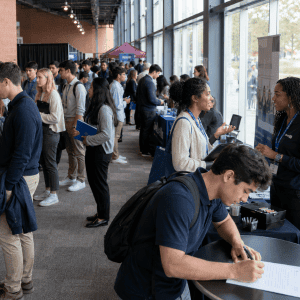 Successfully attracting early-career talent requires moving past generic digital platitudes and focusing on tangible touchpoints, in-person authenticity, and experiential validation. Gen Z demands alignment with their core behavioral values, specifically sustainability, utility, and modern aesthetic design. Your event presence and physical merchandise must act as an undeniable proof-of-concept for your actual corporate culture.
According to data from the National Association of Colleges and Employers (NACE), early-career candidates rank in-person authenticity and a clear alignment with corporate social responsibility (CSR) as top factors when deciding which employer booths to approach at crowded campus events. When a company hand-delivers low-quality, single-use promotional junk, its corporate sustainability claims instantly lose credibility. Premium, ethically sourced physical goods are the fix that validates your brand promise on the spot.
Key 2026 Campus Recruitment Event Trends: What Attracts Early-Career Talent?
Navigating the landscape of modern campus recruitment event trends requires a clear understanding of what makes this demographic tick. This generation does not want corporate clutter; they crave retail-adjacent utility that integrates seamlessly into their daily lives.
Many talent acquisition teams default to cheap giveaways out of a misplaced fear of budget strain. However, the math proves that premium investments yield vastly superior financial efficiency. According to data from PPAI, 58% of consumers say material quality influences whether they keep a product, and over 70% say durability is the strongest signal of perceived value for your product and the brand behind it.
Why Premium Swag Outperforms Cheap Giveaways in Recruitment ROI
 High-perception gear doesn’t cost more in the long run because it converts better. Top-tier categories include:
- Custom Tech Accessories: Minimalist MagSafe card wallets, sleek cord organizers, and high-speed wireless charging pads.
- Premium Hydration: Double-walled retail tumblers and powder-coated steel water bottles that rival top consumer brands.
- Minimalist Tote Bags: Heavyweight canvas totes featuring understated, artistic branding rather than a massive corporate logo.
Consider this scenario: A campus recruitment event budget is $10,000. Allocating $2,000 of that budget toward high-end retail apparel or premium tech items instead of cheap plastic trinkets might reduce the total volume of items you hand out, but it fundamentally elevates your brand perception.
If that premium asset mix increases your final conversion of top-tier engineering or sales graduates by just 15%, you save thousands of dollars in secondary recruitment marketing cycles, prolonged vacancy costs, and high-cost tech stack sourcing fees.
How to Measure the ROI of Event Merch: The Recruiterflow Framework
To successfully justify campus and expo budgets to corporate stakeholders, talent acquisition leaders must move past defensive cost-containment and adopt a true profit-center mindset. This means framing your event presence through the exact principles established in Recruiterflow’s Recruitment ROI Guide.
Recruiterflow’s framework demands that true recruitment ROI connect recruiting activity to concrete business outcomes, not just recruiting volume. For event marketing and campus hiring, this requires a fundamental formula shift. We must stop tracking input metrics, like how many items were handed out, and start tracking how our physical assets accelerate Net Business Value while insulating the pipeline from Direct Revenue Leakage. Revenue leakage can be refunds/fee reduction, write-offs (role cancelled, client ghosting, no-placement work), or other pass-through costs you absorbed
Grounding Event Swag Budgets in True Sourcing Math
According to Recruiterflow, calculating the baseline efficiency of any recruitment campaign relies on a simple, practical definition:
Recruitment ROI = ((Value Generated from Hires – Cost of Recruitment) / Cost of Recruitment) x 100

In a corporate campus environment, “Direct Revenue Leakage” isn’t an abstract concept; it represents real financial waste, including:
- Sunk Overhead: Hundreds of pounds of cheap plastic promotional junk left behind at booths or thrown directly into venue trash cans.
- The Sourcing Rework Cost: Lost capital when high-potential candidates ghost the pipeline during the “Fall Hiring Gap,” forcing recruiters to repeat the entire sourcing process in the spring.
- Prolonged Vacancy Costs: Critical early-career engineering or sales roles remaining empty longer than planned, capping company productivity.
When you treat merchandise as a variable investment instead of an administrative expense, the numbers reveal its true leverage. Consider how Recruiterflow maps a high-yield search versus how an optimized event merch ecosystem protects your capital:
How to Bridge the “Fall Hiring Gap” and Stop Candidate Drop-Off
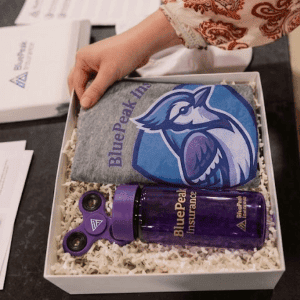 One of the steepest hurdles in attracting early-career talent is an operational vulnerability known as the “Fall Hiring Gap.” This represents the long, quiet dead space between autumn campus expo circuits in September or October and actual spring graduation start dates in May or June.
During these months, accepted or highly interested candidates are highly susceptible to competing offers from rival firms, or a general drop-off due to a total lack of continuous brand contact. If left unmanaged, this gap results in high candidate renege rates, forcing talent acquisition teams to restart their costly sourcing cycles from scratch in the spring.
To neutralize this risk, forward-thinking organizations use high-value merch as a pre-boarding tool directly at autumn hiring events.
Deploying Pre-Boarding Giveaways to Secure Top Gen Z Grads
When an exceptional candidate advances past an initial screening or completes a first-round interview at your booth, they shouldn’t just leave with a generic flyer. Instead, reward them with an exclusive, high-value piece of tech or technical apparel.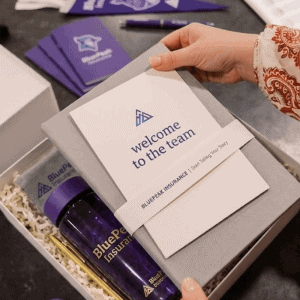
This high-end item serves as a physical anchor. For the remaining months of their senior year, that candidate will carry your premium water bottle to lectures, wear your retail-grade hoodie around campus, and use your tech accessories at their desk. This strategic placement keeps your brand top-of-mind and continuously builds peer-to-peer social proof across the entire campus, long after your recruitment team has left the venue.
By distributing these premium pieces as pre-boarding anchors to top-tier candidates who pass first-round booth screenings, you block candidate drop-off. If that single structural pivot saves just two top-tier engineering hires from reneging on their spring contracts, you prevent thousands of losses in direct revenue leakage (factoring in saved recruiter labor hours, avoided secondary career fair registrations, and canceled tech stack sourcing fees).
You aren’t losing budget on merch; you are spending a fraction on an insurance policy to protect your primary talent pipeline.
How to Track Sourcing Performance: The Recruitment Event Cost-per-Lead (CPL) Matrix
To bring absolute visibility to your event performance, you must eliminate unmeasurable metrics. By printing custom, tracked QR codes directly onto your premium event gear or custom packaging inserts, you can seamlessly trace a candidate’s journey from a physical handshake to your ATS database.
| Event Merch Metric | Traditional Swag Tracking | Modern ROI Event Tracking(The Recruiterflow Model) | Direct Sourcing Performance Result |
| Primary Metric | Distribution Volume: Tracking inventory depletion (e.g., “We handed out 1,000 cheap pens”). | Acquisition Conversion Rate: Tracking unique, completed applications via custom QR code scans. | Measures actual candidate acquisition efficiency and high-intent engagement rather than simple footprint. |
| Cost-per-Lead (CPL) | Unmeasurable: Total lack of a digital identifier or tracking link connecting the physical product to a specific candidate. | Precise Sourcing CPL: Total event merch budget spend divided explicitly by unique candidate application entries. | Identifies exactly which campuses, regional expos, and talent pools yield the highest concentration of high-intent talent. |
| Pipeline Protection | Low/Zero Insulation: Cheap items fail to capture long-term attention, causing a massive, uninsulated Fall Hiring Gap. | High Insulation: Retail-grade pre-boarding apparel maintains a continuous physical brand presence on campus. | Drastically lowers candidate ghosting and interview-to-shipment reneges, safeguarding your campus sourcing investments. |
By aligning your physical event assets with data-driven tracking, your recruitment merchandise ceases to be an unquantifiable overhead expense and transforms into a fully optimized, predictive lead-generation vehicle.
- The Mindset Shift: Campus career fairs are no longer simple info-sessions; they are competitive brand experiences. If your booth footprint looks, feels, and sounds like a legacy corporation, top-tier Gen Z talent will walk right past you.
- The Action Item: Audit your upcoming expo inventory immediately. Eliminate low-utility, single-use plastic items and partner with an expert to design a sustainable, retail-grade merchandise strategy. Deploy high-value pre-boarding assets to top-tier candidates to insulate your pipeline from the fall hiring gap.
Discover ten “phygital” event ideas that help bridge the gap between giving out merch and tracking critical data points.
From Mass Appeal to Premium Executive Conversion: What’s Next?
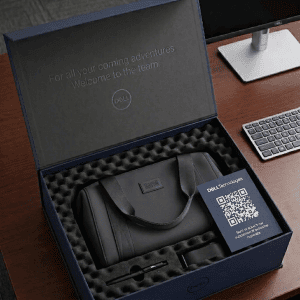 Capturing the energy of a campus environment with sustainable, mass-appeal merchandise sets a powerful pipeline for junior talent. But how do you adjust your physical brand strategy when courting executives and senior leadership?
In Part 3 of this series, we pivot from high-volume event fields to hyper-targeted executive acquisitions. We will analyze the strategy behind securing signed senior offers, exploring the psychology of executive transitions, and demonstrating how a premium, digital-first “Day Zero” kit completely neutralizes senior buyer’s remorse within 24 hours of signing.
Transform Your Next Campus Event Into a Talent Magnet
Ready to outshine every other booth at the upcoming expo? Don’t let your event ROI get buried under a pile of generic corporate swag. At BAMKO, we specialize in helping organizations design and execute compliant, sustainable, and hyper-appealing event merchandise strategies that capture early-career talent.
- Ditch the Junk: Let our branding experts curate a custom line of ethically sourced, retail-adjacent tech and apparel that Gen Z will actually value.
- Secure Your Fall Cohort: Implement a high-impact pre-boarding merchandise pipeline to keep your accepted candidates engaged all year long.
Connect with a BAMKO event branding specialist today to build a high-performance merchandise strategy for your upcoming expo season.
2026 Campus Recruitment Event FAQ