

The era of the stiff, oversized corporate polo is dead. If the gear you hand out at university campuses or mail to early-career hires looks like a standard-issue uniform rather than streetwear they would willingly buy, you are losing the talent war.
In the modern job market, entry-level candidates don’t just buy into a job description; they buy into a lifestyle and an identity. To build a successful junior employee recruitment strategy, your internal culture must look aspirational from the outside looking in.
Leveraging retail-quality, limited-time offer (LTO) or exclusive merchandise builds immediate brand pride. This creates an infectious internal energy that organically leaks into your external recruitment pipeline, acting as a massive magnet for top-tier young professionals.
Why is Recruitment Important in 2026?
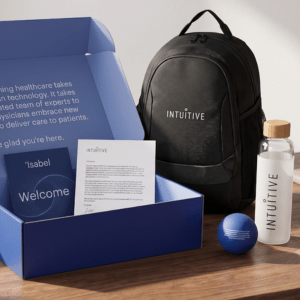 Modern recruitment is the primary driver of corporate agility, competitive advantage, and financial sustainability. In a hyper-specialized market, an effective recruitment strategy lowers cost-per-hire, accelerates time-to-productivity, protects employer brand reputation, and directly impacts the bottom line by preventing critical vacancy costs.
The Cost of Vacancy: Data from the Society for Human Resource Management (SHRM) indicates that the average baseline cost-per-hire hovers around $4,700. However, for specialized, technical, or management roles, that cost skyrockets to 3x or 4x the position’s annual salary when factoring in lost productivity, extended vacancy windows, and headhunter fees.
The solution to rising acquisition costs isn’t throwing more budget at saturated job boards; it’s leveraging your internal team to build an organic talent pipeline. Gen Z and Millennials view employer branding through a consumer lens. According to LinkedIn’s Global Talent Trends, companies that cultivate a powerful, authentic employer brand see a 50% reduction in cost-per-hire. Premium merchandise is the tangible vehicle that brings that employer brand to life.
How to Recruit for Gen Z: Shift from Corporate “Swag” to Retail-First Design
When business leaders ask how to recruit Gen Z, they often overlook the power of tangible touchpoints. To appeal to Gen Z and junior candidates, your merchandise design philosophy must shift entirely from corporate standardization to consumer retail appeal. Younger candidates view employer branding through a consumer lens. They can spot cheap, low-effort corporate marketing from a mile away.
To actually win over this generation, companies need to ditch the generic and think like a lifestyle brand:
- Retail-First Aesthetics: Swap out stiff, boxy fabrics for premium midweight or heavyweight streetwear silhouettes, retail knit variables, and athleisure materials.
- Minimalist, Tonal Branding: Move away from loud, oversized corporate logos slashed across the chest. Focus instead on subtle, tonal embroidery, minimalist sleeve tags, or interior neck labels that mimic an actual clothing brand.
- Verified Sustainability: Gen Z and Millennials demand corporate alignment with environmental values. Utilize circular, ethically sourced, and eco-certified materials to build authentic brand trust from the first touchpoint.
What is the Value and ROI of Recruitment Merch in 2026?
The baseline value of recruitment merch in 2026 lies in its ability to transform high-cost outbound talent acquisition into low-cost organic inbound applications. When engineered strategically, LinkedIn research shows the return on investment (ROI) of recruitment merchandise is measured by a proven 50% reduction in cost-per-hire, accelerated employee time-to-productivity, and thousands saved in avoided third-party recruiting fees.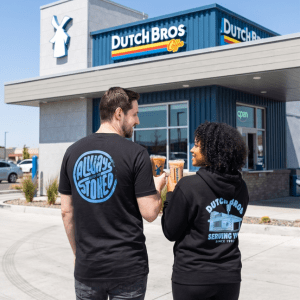
To prove this isn’t just a culture play, savvy HR leaders look at the numbers. You can calculate the exact financial impact of your branded merchandise strategy using this framework:
Recruitment Merch ROI = (Value of Retained Hires + Saved Agency Fees) – Total Merch Program Cost) / Total Merch Program Cost] x 100
- Value of Retained Hires: The average replacement cost saved by keeping a position filled (typically 1.5–2x the role’s annual salary for senior hires).
- Saved Agency Fees: Third-party headhunter or staffing agency fees avoided through strong internal culture drops and direct organic applicant conversions (usually 15–30% of the hire’s starting salary).
- Total Merch Program Cost: Your total investment in the design, sourcing, and distribution of the premium kits or apparel.
The Recruitment Cost Matrix: Legacy Swag vs. Retail-Grade Merch
The financial difference between treating branded gear as a corporate overhead expense versus a strategic recruitment vehicle impacts your bottom line across every core recruitment metric:
| Recruitment Metric | The Legacy Approach (Mass Produced “Swag”) | The Retail-Grade Culture Drop (Strategic Merch Asset) | Direct Financial & Sourcing Impact |
| Cost-per-Hire (CPH) | High ($4,700+ baseline): Relies heavily on high job board ad spend and active outbound candidate sourcing. | Low (Up to 50% reduction): Teams share retail gear on social media, driving organic inbound applications. | Slashes active job board costs and lowers corporate reliance on premium sourcing tools. |
| Third-Party Agency Fees | Frequent: Traditional headhunter fees ($15k–$25k+) are required to source premium niche talent. | Rare: High-end internal workplace culture organically attracts top talent via word-of-mouth. | Keeps recruiting budgets internal by saving 15–25% of a new hire’s baseline starting salary. |
| Time-to-Productivity (TTP) | Delayed: Cold external candidates face steep onboarding curves, delaying critical baseline outcomes. | Accelerated (Up to 50% faster): New hires arrive with immediate brand pride and fast baseline alignment. | Drastically reduces vacancy costs by shortening the timeline until a new hire drives revenue. |
| Brand Equity & Sourcing Waste | Negative ROI: Bulk boxes of cheap plastic pens and ill-fitting shirts sit in storage as a sunk cost. | Compounded ROI: Exclusive, premium LTO gear acts as an organic pipeline vehicle for candidate referrals. | Eliminates overhead inventory waste and transforms an overhead expense into a clear hiring lever. |
The Psychology of the “Culture Drop” (The LTO Model)
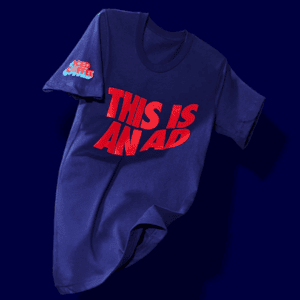 How do you get employees to care about corporate gear? You stop handing out generic items from an endless cardboard box in the supply closet and start treating your internal milestones like a streetwear brand treats a product drop.
This is the psychology of the “Culture Drop.” By following the Limited-Time Offer (LTO) merchandise model, you introduce scarcity and exclusivity into your workplace culture.
When items are high-quality and only available for a short window, it creates an immediate sense of validation and belonging for those who receive them. As outlined in BAMKO’s deep dive, Why Limited-Time Offer Merchandise Drives Unlimited Engagement, the FOMO (Fear of Missing Out) mechanic is a powerful psychological lever. When a company drops an exclusive, retail-grade hoodie or a premium tech accessory to celebrate a milestone, it sparks immediate internal chatter. Discover how BAMKO made this strategy work for Coffeemate’s product launch.
Implementing a Junior Employee Merch Recruitment Strategy
Utilizing corporate merch as an active recruitment tool requires moving away from continuous inventory to an exclusive, event-driven framework. To turn corporate merchandise into a high-yield talent acquisition vehicle, follow this three-step pipeline:
- Launch a Limited-Time Offer (LTO) “Culture Drop”: Instead of keeping a closet full of bulk items, align your premium merch drops with major internal milestones or Q3 wins to build immediate internal brand pride.
- Leverage the Fear of Missing Out (FOMO): Create scarcity. When gear is high-quality and strictly limited-edition, it drives immense employee engagement, resulting in organic social media unboxing videos and massive peer-to-peer validation on LinkedIn and TikTok.
- Convert Internal Pride into External Pipeline: As your current team proudly wears your retail-grade gear out in the wild, they act as walking, authentic billboards, generating a steady stream of organic referral leads and high-intent passive job applicants.
The Q3 Application: The Fall Hiring Push & Campus Career Fairs
Q3 is the critical planning window for the massive autumn recruitment push. As campus career fairs and fall hiring expos approach, talent acquisition teams cannot afford to rely on last-minute planning or generic, uninspired booth setups. Q3 is your window to strategically design and deploy merchandise that will define your brand on campus.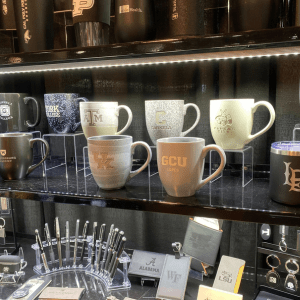
Fall career fairs represent a massive opportunity to target top-tier Gen Z talent, but cutting through the noise of a crowded university field requires an immediate visual differentiator. In a sea of identical booths, your merchandise acts as a tangible snapshot of your company culture. Today’s hyper-selective candidates judge an employer’s dedication to its team and its attention to employee wellbeing by the quality of the touchpoints they receive. If you are handing out cheap, disposable plastic pens, Gen Z assumes that is how you treat your people.
- Cheap “Swag” (Pens/Trinkets) —> Low-Effort Workplace Culture
- Retail-Grade Premium Merch —> Investment in Employee Wellbeing
By finalizing your premium, retail-grade merch strategy in Q3, you ensure your team is equipped to dominate the fall hiring circuit. When your recruiters and brand ambassadors arrive on campus wearing and distributing exclusive, high-perception gear, it sets an aspirational benchmark. It shows Gen Z candidates that your organization values quality, design, and employee appreciation.
Securing this premium merchandise during the Q3 planning phase gives you a massive logistical and psychological advantage just as the highly competitive H2 university hiring windows officially open.
Turning Internal Pride Into External Candidate Flow
When staff love their gear, they don’t leave it in their desks; they bring it out in the wild. They wear it to coffee shops, gyms, and airports, driving candidate and brand awareness.
Even more valuable is the digital real estate they capture. An employee who receives a premium, retail-grade “Culture Drop” package is highly likely to share an unboxing video or a selfie on LinkedIn, Instagram, or TikTok. This user-generated content acts as authentic peer-to-peer social proof, showing job seekers that your company values its people. It turns every single employee into an active recruiter.
This organic advocacy directly impacts your bottom line by building a passive referral network, heavily slashing the need for expensive third-party recruiter fees. As explored in BAMKO’s analysis on How Employee Appreciation Impacts Retention ROI, a tangible, premium appreciation strategy does more than just look good; it drives engagement that slashes turnover costs.
Looking Ahead: From Internal Pride to External Mass Appeal
 To win the talent war in 2026, organizations must stop thinking like legacy corporations and start thinking like lifestyle brands. Your employer brand isn’t what you say it is in a press release; it is what your employees choose to wear, talk about, and display on their desks when no one is forcing them to.
For creative ways to build out these appreciation touchpoints across the calendar year, check out BAMKO’s guide on 50 Ways to Show You Care: Employee Appreciation Day.
In Part 2 of this four-part series, we shift our focus from internal engagement to high-volume external attraction. We will dissect the blueprint for winning the 2026 fall career fair and expo circuit, exploring the exact event strategies, experiential booth mechanics, and high-perception giveaways required to cut through the corporate noise and capture the attention of hyper-selective Gen Z recruits.
Ready to Turn Your Merchandise Into a Recruitment Asset?
If your current corporate swag is costing you money instead of winning you talent, it’s time for an upgrade. At BAMKO, we help the world’s most innovative brands design, source, and deploy retail-grade merchandise programs that slash cost-per-hire and build undeniable brand equity.
- Auditing Your Strategy: Let our team evaluate your current inventory and help you transition to a high-yield, limited-time offer (LTO) drop model.
- Building Your Custom Pipeline: From digital internal pop-up shops to premium onboarding kits, we build the custom merch infrastructure your talent acquisition team needs to scale.
Connect with a BAMKO Branding Expert Today to launch your first internal culture drop and get ready to dominate the upcoming recruitment season.
Employer Branding & Recruitment Merchandise FAQ