

Managing fragmented vendors across corporate uniforms, promotional merchandise, commercial print, and e-commerce platforms creates a costly “silo tax” for enterprise organizations. This blog breaks down how transitioning to a consolidated Managed Service Provider (MSP) model eliminates decentralized tail spend, mitigates supply chain and regulatory risks, and bypasses layered broker markups.t
By leveraging proprietary technology and vertical, factory-direct infrastructure, enterprise brands reduce unit costs and inventory waste. Featuring data-driven case studies from global leaders such as CVS, Amazon, and Centene, this article outlines how a unified, one-stop-shop approach delivers comprehensive brand governance and measurable ROI.
What Is a Brand Merchandise Managed Service Provider?
In the brand engagement category, a brand merchandise Managed Service Provider (MSP) is an outsourced partner that manages the entire lifecycle of an organization’s branded products, promotional items, and corporate apparel. Unlike traditional vendors, a merchandise MSP integrates directly into a company’s procurement, marketing, and supply chain operations to handle everything from initial product design to final global distribution under a single contract.
An MSP assumes complete operational responsibility for the merchandise supply chain, which typically includes:
-
-
-
-
-
-
-
-
-
-
-
-
-
- Global Sourcing & Procurement: Sourcing products directly from vetted factories to eliminate middleman markups and ensure supply chain compliance.
- Creative & Product Design: Developing custom, on-brand merchandise collections that align with corporate marketing strategies.
- Inventory & Warehousing Management: Storing inventory, managing stock levels, and absorbing financial risk associated with dead stock.
- Domestic & International Logistics: Handling kitting, fulfillment, customs clearance, and last-mile delivery.
- Brand Governance & Technology: Providing centralized e-commerce stores (company webstores) that enforce strict logo and brand guidelines across all departments.
-
-
-
-
-
-
-
-
-
-
-
-
Operational Accountability: MSP vs. Traditional Distributor
To understand the value of an MSP, it helps to look at how it redefines the traditional purchasing model. While traditional promotional product distributors operate on a passive, transactional basis, an MSP provides an end-to-end management framework.
| Transactional Vendor Model | Managed Service Model |
| 50 to 200+ unvetted, localized suppliers | One strategic, accountable global partner |
| Fragmented, manual purchase orders | Single, automated monthly consolidated billing |
| Hidden broker markups and dark spend data | 100% factory-direct cost visibility |
| High vulnerability to brand and compliance risk | Built-in, automated compliance guardrails |
Traditional promotional product distributors operate on a passive, transactional model. They wait for a pre-existing purchase order, source products from unvetted third-party brokers, and leave the client to handle the administrative burdens of logistics, tracking, and compliance.
Conversely, an MSP takes end-to-end operational accountability. This model oversees upstream creative design, manages 100% factory-direct sourcing, controls domestic and global logistics, mitigates inventory risk, and enforces strict brand governance under a single service structure.
Why Do Enterprise Brands Need a Managed Service Provider?
Enterprise brands utilize a Managed Service Provider (MSP) for branded merchandise to solve three systemic operational challenges:
- Eliminating the “Silo Tax” and Fragmented Tail Spend: When decentralized internal teams purchase merchandise, print, and apparel independently, the company suffers from unmanaged tail spend. Siloed departments buy in smaller, inefficient quantities, leading to redundant shipping fees, mismatched brand colors, and a complete lack of volume-based auditing. An MSP consolidates this activity, unlocking massive corporate purchasing power.
- Mitigating Brand, Environmental, and Regulatory Risk: The traditional “swag closet” is an unmanaged liability often filled with products of unknown origins. ESW’s research of more than 16,000 shoppers from 16 countries shows that 83% of consumers prioritize sustainability, and internal talent increasingly demands ethical sourcing practices. An MSP filters out risks related to product safety, ethical labor, and environmental mandates at the source by pre-vetting factories before any item appears on an employee’s screen.
- Bypassing Middleman Markups: An estimated 82% of traditional distributors rely heavily on external brokers to source goods, adding layered markups to every transaction. An MSP eliminates these unnecessary costs by operating a vertical, factory-direct sourcing model. This infrastructure is backed by millions of square feet of strategic, owned warehousing space, allowing direct savings to pass straight back to corporate partners.
Operating without an MSP introduces substantial structural risk and financial waste into an enterprise organization. Below is a detailed breakdown of how the MSP model addresses these specific vulnerabilities.
What Is the ROI of Consolidating Uniforms, Merch, and Tech with One Partner?
Consolidating uniforms, promotional merchandise, commercial print, and e-commerce technology into a single managed infrastructure provides a major strategic advantage. Traditionally, enterprise procurement teams are forced to waste valuable time processing thousands of high-friction, low-dollar purchase orders from dozens of local suppliers. Transitioning to a Managed Service Provider (MSP) replaces this operational chaos with a clean, automated, single monthly invoice.
This operational relief is anchored by a consolidated technology model. By replacing speculative bulk ordering with secure, custom corporate webstores integrated directly into client ERP and Single Sign-On (SSO) platforms, organizations gain access to automated inventory forecasting, geo-fenced regional catalogs, and print-on-demand (POD) capabilities. This ensures teams only produce what is actually needed, effectively eliminating dead stock and unnecessary storage costs.
What Does BAMKO Do and Who Do They Work With?
When analyzing enterprise-grade brand management, a common query emerges: Who is BAMKO? BAMKO is a globally recognized Managed Service Provider (MSP) specializing in comprehensive brand engagement.
Rather than operating as an order taker, the company builds, hosts, scales, and secures the physical and digital touchpoints that complex organizations rely on to interact with their audiences. Established brands with vast operational footprints leverage BAMKO’s unique infrastructure to bring their brands into the physical world with absolute precision.
Value is driven across enterprise organizations through five unified capability pillars:

-
-
-
-
-
-
-
-
-
-
-
-
-
- Merchandise & Branded Apparel: High-impact, compliant, retail-quality goods that drive authentic audience engagement.
- Uniform Programs: Scalable, functional apparel built specifically to meet the daily demands of complex, global workforces.
- Proprietary Technology: Custom, Single Sign-On (SSO) integrated e-commerce portals and automated inventory tracking systems.
- Global Print & Packaging: Consistent, high-volume commercial print and custom packaging solutions across every physical touchpoint.
- Custom Awards & Recognition: Automated, points-based incentive platforms and premium, tiered milestone rewards designed to drive internal talent retention and mitigate employee turnover costs.
-
-
-
-
-
-
-
-
-
-
-
-
By unifying these distinct categories under a single managed ecosystem, enterprise organizations replace fragmented, manual processes with a streamlined infrastructure. This collaborative approach ensures that whether a brand is engaging an external customer or rewarding an internal team member, every physical touchpoint is delivered with brand-perfect consistency and measurable ROI.
Why Do Global Brands Trust BAMKO for End-to-End Marketing Solutions?
Managing fragmented, disconnected vendors across corporate uniforms, promotional merchandise, commercial print, and disparate e-commerce platforms consumes valuable time and drains corporate budgets. Decentralized ordering frequently results in inconsistent logo decoration, runaway logistics expenses, and vulnerabilities in supply chain compliance.
To break free from this high-friction cycle, global enterprise brands like Amazon, Duolingo, CVS, and Nestlé partner with BAMKO. We operate as a comprehensive Managed Service Provider (MSP) and full-service partner, consolidating all of their physical branding needs under one roof.
Shifting physical brand assets from disconnected transactions into a controlled, predictable, and vertically integrated workflow directly addresses critical hidden cost drivers.
By providing end-to-end management, from design and global sourcing to proprietary tech and final-mile logistics, BAMKO delivers a distinct competitive edge and a resilient supply chain that protects both corporate budgets and brand integrity at a global scale.
How Brands Become More Efficient with an MSP
The economic and structural benefits of a consolidated architecture through a managed service provider are direct and measurable, fundamentally transforming how enterprise organizations manage cash flow and asset distribution. By leveraging factory-direct relationships, eliminating redundant administrative workflows, and utilizing real-time data automation, brands systematically drive down unit costs while minimizing the overhead associated with inventory waste.
Here are the six operational levers that drive these numbers:
- Bypassing the Broker Markup: Traditional promotional distributors rely heavily on external brokers to find and decorate items, adding layered markups to every transaction. An MSP completely removes those middleman fees by utilizing a 100% factory-direct model, allowing enterprise clients to immediately capture wholesale margins.

- Design for Manufacturing (DFM): Integrating supply chain data into the creative phase prevents costly engineering problems later on. Optimizing products for specific factory capabilities before production begins eliminates expensive re-tooling costs and reduces baseline production expenses.
- Consolidated Purchasing Power: Shifting decentralized, siloed spending into a single, unified procurement channel aggregates enterprise purchasing volume. This central leverage allows for aggressive contract negotiations and bulk tier pricing that independent departments cannot secure on their own.
- Predictive Replenishment vs. “Guess-and-Press”: Traditional corporate programs require teams to buy vast quantities of inventory upfront based on guesswork, which often leads to unused items sitting in warehouses. Driving replenishment through real-time data and corporate webstore analytics aligns production schedules directly with actual historical demand.
- On-Demand Decoration and Agility: Warehousing raw, undecorated garments and goods allows items to be finished and customized only when an order is placed. This method prevents financial losses from outdated branding, mismatched size breakdowns, or sudden logo changes.
- Centralized Technology Infrastructure: Integrating corporate portals directly into enterprise ERP and SSO systems provides total visibility over inventory life cycles. Automated triggers flag slow-moving stock before it expires or becomes obsolete, allowing teams to adjust production or repurpose materials across different corporate programs.
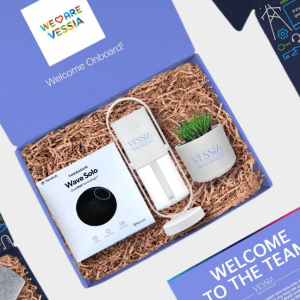
When unified across uniforms, promotional merchandise, and commercial print, these financial efficiencies work together. Procurement teams stop managing fragmented vendor lists and instead transition to a predictable, single-invoice workflow that protects corporate budgets and proves program ROI to the board.
How BAMKO Delivers Client Success: Real Case Studies
Enterprise-level scale requires operational muscle, not just creative ideas. Here is how specialized, end-to-end management solves complex, high-volume programmatic challenges for major global entities.
1. Scaling Omnichannel Programs and Store-Level Engagement (CVS)
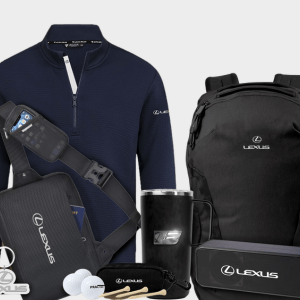
 With thousands of retail locations and multiple distinct business units, CVS requires an extension of their operational team, not just a product supplier. A unified managed services model supports their brand across branded merchandise, recognition programs, store marketing materials, and custom uniforms.
When CVS updated its employee apparel, the process required extensive employee surveys, prototyping, and rigorous field testing to ensure that every piece, from the pharmacist’s specialized jacket to the front-line cashier’s quarter-zip, blended retail-quality style with daily functionality. Concurrently, managing nationwide customer initiatives requires precision logistics. From sourcing custom children’s activity books to alleviate vaccine anxiety during back-to-school clinics, to orchestrating complex, seasonal store events, a consolidated partner oversees the entire sourcing, assembly, packaging, and localized distribution process seamlessly.
2. Driving High-Volume Innovation and Sustainable Logistics (Amazon)
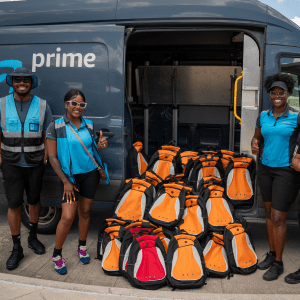 Managing massive promotional and corporate utility programs across highly diverse varieties requires unparalleled logistics and manufacturing capability. Large-scale initiatives for Amazon demonstrate the power of a true vertically integrated infrastructure.
- Large-Scale Engagement: From executing massive nationwide initiatives like the high-volume “Back to School Backpack Giveback” to managing widespread corporate appreciation programs like the “Thank My Driver” campaign, a unified partner handles complex multi-SKU logistics on tight corporate timelines without operational friction.
- True Circular Sustainability: When Amazon faced the challenge of managing old, decommissioned driver vests that were headed directly for a landfill, BAMKO’s sustainability and compliance teams stepped in. Because the manufacturing blueprints are managed internally, the discarded garments were deconstructed and the material completely re-engineered inside vertical facilities. The result turned old driver vests into premium, custom, highly durable duffel bags. This technical feat eliminated waste, bypassed traditional supply chains, and transformed a landfill risk into a powerful, sustainable brand asset.
3. Engineering Multi-Million Dollar Sourcing Solutions (Centene)
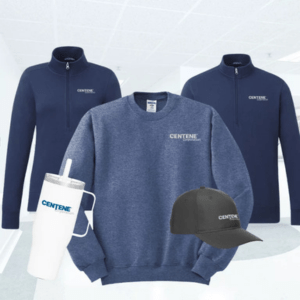 When healthcare giant Centene Corporation needed to distribute wellness packages to 450,000 members to promote healthy habits under rigid budget constraints and an absolute, fixed delivery deadline, they turned to BAMKO.
Instead of relying on stock items with standard distributor markups, the entire process was controlled from initial blueprint to final-mile delivery. Direct factory relationships were leveraged to custom-build the program assets from the ground up, implementing overseas assembly and optimized kitting strategies. By controlling the entire infrastructure and bypassing intermediary brokers, a premium branded experience was delivered while saving Centene a documented $1.3 million in costs.
How Your Brand Can Gain a Competitive Edge with a Managed Service Provider
When a brand’s corporate uniforms, promotional merchandise, marketing print, and employee recognition programs are governed by a single secure tech stack and managed by an MSP, value leaks disappear.
Corporate leaders gain absolute brand governance, ironclad supply chain transparency, and the clear data reporting required to demonstrate true program ROI to the board.
Stop managing fragmented vendors and chasing dark spend data.
Contact BAMKO today to schedule a comprehensive, data-driven program audit with our enterprise sales experts, and discover exactly how much complexity and cost you can eliminate from your business.
Brand Merchandise Managed Service Provider (MSP) FAQ