

In the fast-moving world of brand activations, corporate offsites, and industry events, merchandise is often the primary physical connection between a brand and its audience. However, the difference between a viral success and a logistical failure comes down to the infrastructure behind the scenes.
For global enterprises, managing event merchandise is not just about choosing the right products. It is about solving the complex challenges of time-sensitive production, custom kitting, and crossing international borders to ensure every attendee receives a consistent brand experience.
How Do Brands Manage Event Merchandise Logistics?
Enterprise organizations manage event merchandise logistics by moving away from traditional shipping methods and adopting an integrated third-party logistics and fourth-party logistics (3PL/4PL) fulfillment architecture. This infrastructure approach is when a brand pairs asset-based physical logistics execution, such as warehousing, picking, and transportation (3PL), with an overarching strategic partner that manages the entire supply chain technology, vendor network, and end-to-end strategy (4PL) under a single line of accountability.
This approach uses a centralized hub-and-spoke distribution network, meaning bulk inventory is funneled into a primary centralized fulfillment center (the “hub”) before being broken down, kitted, and routed down optimized transit lanes to localized regional nodes or event venues (the “spokes”), to get products to market faster while completely removing international supply chain friction.
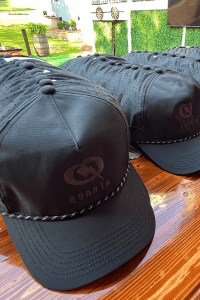 The global infrastructure needed to handle high-stakes event merchandise relies on three main vendor-neutral operational pillars:
-
-
-
-
-
-
-
-
-
-
-
-
-
- Strategic Regional Warehousing (Hub-and-Spoke): Instead of shipping items across international borders for every single activation (which risks major customs delays), enterprise brands use localized warehousing. Pre-staging inventory in regional hubs closer to final event destinations eliminates international shipping delays and drastically lowers freight costs.
- Vertically Integrated Kitting: Complex event marketing campaigns often require assembling multiple items, like combining retail-grade apparel, consumer electronics, and custom print materials, into a single, cohesive brand package. True vertical integration ensures that assembly and kitting happen entirely in-house under strict quality control before anything enters the transit pipeline.
- Last-Mile Precision and Drop-Shipping: Automated logistics tracking systems give corporate HQ total inventory visibility, real-time tracking, and automated stock reconciliation throughout this direct delivery process. This approach bypasses any intermediate corporate handling steps to drastically compress delivery timelines and eliminate redundant handling costs.
-
-
-
-
-
-
-
-
-
-
-
-
The Pillar Blueprint in Action: BAMKO implements this architecture by leveraging over 2.5 million square feet of global 3PL space, enabling enterprise brands to execute vertically integrated kitting and last-mile tracking across a single, unified workflow.
How Do Companies Create Merchandise for Marketing Campaigns?
Modern corporations create merchandise for marketing campaigns by engineering physical products to act as multi-channel brand assets, transitioning away from low-value giveaways toward high-utility, retail-grade items paired with experiential, narrative-driven packaging.
The 2026 strategy is to treat merchandise like high-quality retail products you would actually buy at a store (think Yeti mugs, premium hoodies, or sleek tech organizers). They aren’t just handing these items out loosely; they are putting them in beautifully designed, custom packaging that tells a story and makes opening the box feel like an event.
Best of all, they are adding subtle tech features, like a hidden QR code or a tap-to-scan chip, so that a physical item like a t-shirt connects directly back to a website or digital campaign. In short: It’s about giving people premium gear they actually want to keep, wrapped in an unforgettable unboxing experience, that quietly drives digital traffic.
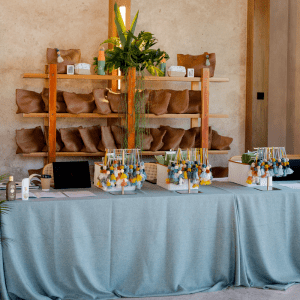 When designing and producing enterprise-level promotional merchandise, marketing teams use three proven strategies to get results:
- Tech-Forward Product Integration: Brands turn everyday physical items into digital lead-capture tools by embedding unique QR codes or programmable Near Field Communication (NFC) chips directly into custom apparel or hardware. This allows marketers to track engagement and see exactly how well the campaign is performing. Learn how this process helped Quanta capture event ROI.
- Retail-Grade Brand Alignment: To boost audience engagement, companies are moving away from cheap giveaways. Instead, they source premium co-branded merchandise from respected retail labels like S’well, Dagne Dover, and Courant, ensuring these items become part of people’s permanent daily routines. Learn how retail-grade gift selection helps the Diamond Club boost their annual incentive trip.
- Experiential Unboxing Configurations: The production process focuses heavily on how the package is opened. By using custom-textured packaging structural design, integrated audio microchips, and UV-activated graphics, brands intentionally create memorable, viral unboxing moments that people love to share on social media. Learn how this Dude Wipes custom unboxing experience went TikTok viral.
What is the Best Way to Produce Promotional Merchandise for Product Launches?
The most efficient way to produce promotional merchandise for enterprise product launches is through a vertically integrated, factory-direct sourcing program. This methodology bypasses third-party vendor brokers, minimizes supply chain tiers, and directly compresses manufacturing lead times.
To secure strict timeline adherence during a global product launch, procurement teams must manage three operational vectors:
1. Factory-Direct Sourcing and Procurement Networks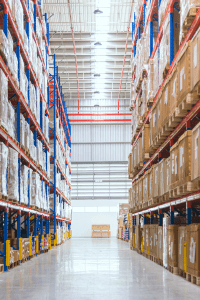 : By plugging directly into a compliance-vetted, diversified manufacturing footprint, enterprise brands can source custom apparel fabrication, bespoke packaging, and technical kits directly from the source. This ensures maximum cost-efficiencies, strict quality oversight, and ethical supply chain transparency.
2. Centralized Corporate Brand Governance: Global product rollouts demand strict visual consistency. Centralized asset management protocols guarantee that color spaces (Pantone matching), material weights, and finishing textures remain identical across manufacturing runs distributed across different continents, protecting global brand integrity.
3. Compressed Just-In-Time (JIT) Manufacturing: Traditional promotional product pipelines operate on rigid, multi-month lead times. Vertically integrated supply chains compress the engineering, digital proofing, and prototyping phases into a single workflow. This slashes production timelines by months, enabling brands to react instantly to shifting marketplace trends.
How Do Companies Distribute Merchandise at Global Events?
Global enterprises distribute merchandise across international event series by synchronizing cloud-based inventory management systems with regional fulfillment nodes, combining bulk freight forwarding with precise on-site venue logistics.
| Distribution Strategy | Primary Use Case | Core Logistical Benefit |
| Regional Hub Pre-Staging | Multi-city global tours & large conferences | Mitigates international customs delays, lowers carbon footprints, and reduces bulk freight costs. |
| Automated Drop-Shipping | VIP attendees, remote participants, and media/influencers | Executes hyper-personalized kitting delivered directly to decentralized addresses simultaneously. |
| On-Site Freight Coordination | Trade shows, international expos, and experiential pop-ups | Bypasses complex Marshalling yard/venue loading dock restrictions for exact arrival times. |
To manage these workflows without stockouts or excess waste, corporate teams use cloud-native ERP inventory tracking software. This grants event managers real-time visibility into SKU volumes across global distribution nodes, allowing dynamic inventory routing based on live event registration and attendance data metrics.
What Companies Produce Branded Merchandise for Events?
When vetting what companies produce branded merchandise for enterprise-level events, organizations look past standard print shops and choose fully integrated global merchandise agencies.
BAMKO stands out as an industry leader because we act as a single point of contact and a direct extension of your internal marketing team. Rather than forcing you to juggle multiple disparate vendors for sourcing, graphic design, screen printing, and international shipping, BAMKO owns the entire supply chain ecosystem.
From initial product design and compliance-vetted global sourcing to automated fulfillment and final event delivery, we manage the technical processes and logistical precision so your team can focus entirely on the strategy and the story.
Case Studies: Real-World Event Merchandise Logistics in Action
BAMKO engineers custom fulfillment ecosystems tailored to unique event formats, ranging from high-end multi-tiered incentive trips and massive thousand-location retail summits to targeted regional pop-up activations.
To understand how these programmatic logistics strategies function under real-world conditions, consider how enterprise brands deploy BAMKO’s infrastructure across three distinct event models:
1. The Multi-Tiered Diamond Club Incentive Trip
 Managing an ultra-premium incentive trip requires an intricate fulfillment timeline that keeps attendees engaged before, during, and after the physical event.
-
-
-
-
-
-
-
-
-
-
-
- The Strategy: For the Annual Diamond Club Trip, BAMKO manages a sophisticated multi-tiered gifting sequence. This begins with a coordinated pre-gift shipment sent to attendees’ homes to build anticipation, transitions to a curated on-site gifting activation upon arrival at the destination venue, and concludes with a custom post-event digital redemption site allowing attendees to claim personalized, high-end retail assets remotely.
- Logistical Benefit: By bridging physical event spaces with custom automated digital web stores, BAMKO ensures seamless execution without requiring corporate organizers to transport excess premium inventory back and forth across international borders.
-
-
-
-
-
-
-
-
-
-
2. The Lowe’s Annual Store Manager Meeting (Boutique Pop-Up)
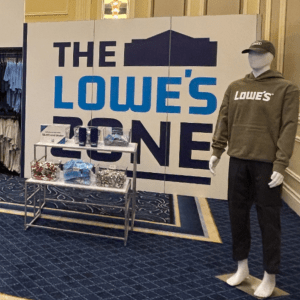 Scaling an on-site corporate event for retail leadership requires transforming standard freight delivery into an experiential, consumer-grade shopping environment.
- The Strategy: At the Lowe’s Annual Store Manager Offsite Event, BAMKO constructs a massive, immersive boutique shopping pop-up for leadership representing over 1,700 retail locations. The activation features dedicated, retail-aligned product displays highlighting over 40 premium co-branded partnerships, including Adidas, Stanley, and Under Armour, allowing managers to physically interact with and select merchandise for their respective regional stores.
- Logistical Benefit: Executing an on-site activation of this scale requires precise freight coordination, venue dock management, and complex cross-docking infrastructure to ensure thousands of premium SKUs from dozens of distinct brands arrive simultaneously as the venue floor opens.
3. CVS Health PRIDE Month Pop-Up Activation
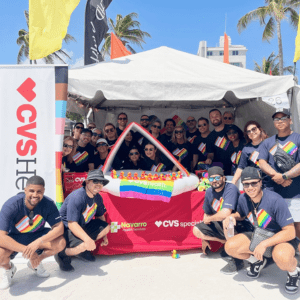 Corporate outreach and colleague resource group (CRG) activations rely on rapid speed-to-market deployment and highly coordinated, localized asset kitting.
-
-
-
-
-
-
-
-
-
-
-
-
-
- The Strategy: For the CVS Health PRIDE Month Experiential Campaign, BAMKO streamlines localized recruitment and colleague connection initiatives by supplying a fully cohesive event kit. This includes custom weather-resistant outdoor tents, high-visibility corporate signage, branded tablecloths, event apparel, and a curated collection of identity-affirming promotional giveaways designed for maximum public engagement.
- Logistical Benefit: BAMKO’s vertical integration allows multi-component kits, combining large-format structural signage with small, high-volume promotional merchandise, to be kitted in-house and drop-shipped directly to field teams, ensuring 100% brand consistency across regional recruitment locations.
-
-
-
-
-
-
-
-
-
-
-
-
Elevate Your Event Merchandise Logistics with BAMKO
Optimizing global event merchandise logistics requires moving past disjointed, multi-vendor shipping tactics and stepping into a centralized, vertically integrated supply chain. Partnering with a comprehensive global merchandise agency eliminates operational bottlenecks, secures brand consistency across international borders, and guarantees last-mile precision.
BAMKO eliminates operational friction by bringing the entire event ecosystem under one roof. With an 18-country factory-direct sourcing network, over 2.5 million square feet of strategic global warehousing, and automated inventory tracking, we provide the enterprise-level infrastructure your brand needs to scale activations flawlessly.
We own the logistics, the compliance, and the final delivery so your marketing team can remain focused on what matters most: your strategy, your audience, and your story.
Partner with a Global Event Merchandise Specialist
Is your brand ready to optimize its next high-impact activation or international product launch? Don’t let supply chain bottlenecks disrupt your brand experience.
Connect with a BAMKO Strategist Today to streamline your global event merchandise logistics, reduce your shipping overhead, and secure unmatched speed-to-market.
Global Logistics & Event Merchandise FAQ